Today you will do a virtual lab showing the different phases of the moon.
Virtual Lab
Drag the text down on the left hand side of the lab. Read the procedures for the lab. After you are done, draw a diagram of the moon phases with the sun. Include a paragraph explaining the diagram and why the moon changes.
HW: Project DUE
Thursday, April 1, 2010
Friday, February 12, 2010
Friday, February 12th
Stop and make sure you have completed both homework assignments for this week before you play the Forces Game: 3 Puck Chuck
Homework:
p. 96-103 Reading and Visual Checks
p. 103 #1-5
Have a nice week off!
Homework:
p. 96-103 Reading and Visual Checks
p. 103 #1-5
Have a nice week off!

Tuesday, February 2, 2010
Wednesday, 2/3/10
Today in class we will be doing a forces lab on PBS.com.
You will be exploring different actions that occur in structures. On a piece of binder paper, keep track of the forces that occur in each action. Draw diagrams of the forces in each action and write down examples of where the action takes place in a real structure.
Answer the following questions after you have taken notes on the forces in 5 different actions.
1. Are the forces balanced forces or unbalanced forces in each action.
2. Why do you think it is important for engineers to know what forces happen in each action?
3. If you were an engineer asked to build a new bridge, what actions from this lab would you need to keep in mind when designing the bridge? Explain why you chose the actions.
HW: Page 94 #1-6
Wednesday, January 13, 2010
Thursday, January 14th: Speed Problems
Today in class you will practice solving for speed, distance, and time using the speed triangle. Keep track of your work and solutions on a piece of binder paper under the correct website header.
Website #1 Calculate and show your work on a separate piece of binder paper under the heading Website #1. Check your answers by clicking the "Please Mark" button on the bottom of the page.
Website #2 Follow the slides and calculate each problem using the information given on the left side of each slide. Keep track of your work on your binder paper under the heading Website #2. After you complete 10 problems, come back to the blog.
Challenge Question #1!
Challenge Question #2! Extra Credit: These are REAL challenges if you finish early. List the steps that you took to answer either question for some extra credit.
Speed of Light Extra Credit: Are you interested in how the speed of light was measured? Read this short article and describe how the speed of light was measured in a one paragraph summary.
Friday, December 11, 2009
Extra Credit Opportunities
Extra Credit and all missing assignments are DUE on Friday December 18th.
Choose from the following two choices:
1. On page 446-447 pick from one of the following assignments: a) Something in the Air, b) What do you Mean by That? or c) Labeling Trans Fat
Use the following link for research: Real World Science Links
2. On page 442 do the Summarize assignment: Create your own lesson summary as you write a Newsletter. Follow the directions to complete the newsletter.
Thursday, December 3, 2009
Carbon Project
Carbon Project
Background
Carbon is arguably the most essential element on Earth.
Step One
Pick a topic for your project. Your topic must relate to why carbon is critical to life on Earth.
Possible Topics:
1. Carbon comes in many forms (graphite, diamond, charcoal)
2. Carbohydrates
3. Carbon fiber
4. Carbonation (in Soda!)
5. Chemical Bonding of Carbon
6. Photosynthesis
7. Carbon Cycle
8. Carbon Footprint
9. It’s All About Carbon
10. Carbon-Based Life
11. Carbon-Dating (Used to date archeological finds, fossils, etc.)
http://www.pbs.org/wgbh/nova/first/radiocarbon.htmlTo Research further you may also use nettrekker. which is an educational search engine.
Click on the following link: NETTREKKER
Login as Username: burnettstudent
password: student
Step Two
Research your chosen topic. Use the provided links. If you still need more information, use Google Search. Open a Pages blank document or MS Word file, title it: Carbon_mylastname_my firstname. Save it to your desktop (not to your digital locker, at least not yet). In the last five minutes of class, save your work in your digital locker. While researching, answer the following questions:
Topic #1: Carbon Comes In Many Forms
1. Pure carbon exists in how many different forms?
2. Can you find pure carbon in nature?n If yes, where?
What makes carbon look different in each form?
About Graphite
1. How is it made?
2. Is it a hard or soft material?
3. Describe 3 important uses of graphite.
About Diamonds
1. Where (which countries) is it found?
2. How far down in Earth are diamonds found?
3. How do humans "get" diamonds?
Topic #2: Carbohydrates
1. What is it?
2. What are carbohydrates used for?
3. Do carbohydrates come in different forms? If so, give examples.
4. How are carbohydrates made?
5. Why do humans like carbohydrates?
Topic #3: Carbon Fiber
1. What is carbon fiber?
2. How is carbon fiber made?
3. What is the history of carbon fiber?
4. What is carbon fiber used for?
Topic #4: Carbonation in Soda
1. What is it?
2. Why do we want carbonated soda?
3. Are we adding pure carbon when making carbonated soda?
Topic #5: Chemical Bonding
1. How many bonds does carbon form?
Topic #6: Photosynthesis
1. What is it?
2. What is carbon bonded to before the reaction?
3. What is carbon bonded to after the reaction?
Topic #7: Carbon Cycle
1. What is it?
2. What are the five main "parts" of Earth carbon moves (cycles) through?
3. What form does carbon take when it is in our atmosphere?
4. What form does carbon take when it is in our oceans?
5. How do plants and animals exchange (share) carbon? Explain how the process works.
Topic #8: Carbon Footprint
1. What is it?
2. How is the carbon footprint measured?
3. What is the history of the term?
Topic #9: It's All About Carbon (Overview)
1. Why is carbon the central element in life?
2. How is oil and coal made?
3. What can humans do to slow down global warming?
Topic #10: Carbon-based Life
1. How many atoms can carbon bond with?
2. Why do scientists think that other life forms will probably be made out of carbon?
3.
Topic #11: Carbon Dating
1. What is it?
2. What do we use carbon dating for?
3. How does carbon-dating work?
Step Three
Present your research, into one of the following ways:
- a Poster using Pages,
- a Cartoon using Comic Life,
- a research report using MS Word,
- a slide show using Keynote,
- a web using Inspiration 8
- a photo album using iPhoto
- a short video using iMovie
Thursday, November 19, 2009
Acid Base Indicator Project
Purpose: The purpose of this project is to communicate to the class your opinion as to which type of acid-base indicator is the most effective in identifying acids bases and neutral substances: litmus paper, cabbage juice, or pH paper.
Step 1: Research- Use the following websites to help you to make an educated decision as to which indicator is most effective:
Litmus Paper
What is litmus paper?
How litmus paper is made
Function of Litmus Paper
Cabbage Juice
Introduction to Red Cabbage Juice
More info on Cabbage juice
Step 2: Choose the type of indicator that you found was the best.
Step 3: Choose a media
Written Speech (3 paragraph minimum)
Poster using Pages
Keynote presentation
Step 4: Plan the Content
Content should include:
-What does the indicator look like?
-How does the indicator work?
-What information does the indicator give you?
-Reasons for why you think this is the best type of indicator.
-A counter-argument
Step 5: Save
Save the file as period_lastname_firstname_indicators
example: 1_foerder_diane_indicators
Drop it into my drop box
Step 1: Research- Use the following websites to help you to make an educated decision as to which indicator is most effective:
Litmus Paper
What is litmus paper?
How litmus paper is made
Function of Litmus Paper
Cabbage Juice
Introduction to Red Cabbage Juice
More info on Cabbage juice
pH Paper
What is pH?Step 2: Choose the type of indicator that you found was the best.
Step 3: Choose a media
Written Speech (3 paragraph minimum)
Poster using Pages
Keynote presentation
Step 4: Plan the Content
Content should include:
-What does the indicator look like?
-How does the indicator work?
-What information does the indicator give you?
-Reasons for why you think this is the best type of indicator.
-A counter-argument
Step 5: Save
Save the file as period_lastname_firstname_indicators
example: 1_foerder_diane_indicators
Drop it into my drop box
Monday, November 16, 2009
Tuesday, November 17th
Explore the kitchen for clues. For each clue write down what you think the clue is telling you. Use the clues to predict if each of the substances are acids, bases, or neutral. You can also try the bottle rockets with each substance.
Kitchen Chemistry
When you reach the Science Journal section make a data table to show your results:
Product Acid/Base/Neutral? Can be used
as Rocket
Fuel?
Mouthwash Base No
Vinegar
Pineapple Juice
Bottled Water
Orange Juice
Peppermint Extract
Lemon Juice
Stain Remover
Kitchen Chemistry
When you reach the Science Journal section make a data table to show your results:
Product Acid/Base/Neutral? Can be used
as Rocket
Fuel?
Mouthwash Base No
Vinegar
Pineapple Juice
Bottled Water
Orange Juice
Peppermint Extract
Lemon Juice
Stain Remover
Thursday, November 5, 2009
Thursday, November 5th
For today's assignment you will be balancing equations online. For each equation you balance on the computer, please copy and solve the equation on a piece of binder paper for your records. Click on the links below to start.
FunBrain Balancing Equations
Equations Fun
Balancing Equations Tutorial
Homework: Finish Balancing Equations Practice Worksheet
FunBrain Balancing Equations
Equations Fun
Balancing Equations Tutorial
Homework: Finish Balancing Equations Practice Worksheet
Wednesday, October 28, 2009
Wednesday, October 28th
When you are done with today's computer assignment read and try these tutorials about Balancing Chemical Equations
Tutorial 1
Tutorial 2
Homework: None
Tutorial 1
Tutorial 2
Homework: None
Tuesday, October 27, 2009
Sunday, October 11, 2009
Monday October 12th: Building Molecular Models
Today we will learn about valence electrons and how atoms bond to form molecules in a compound.
Let's try out this virtual lab:
Molecular Models
Homework: Read pg. 218-228 Do pg. 228, #1-6
Let's try out this virtual lab:
Molecular Models
Homework: Read pg. 218-228 Do pg. 228, #1-6
Friday, October 9, 2009
Thursday, October 8, 2009
Thursday, October 8th
Start with the Compound Examples website.
1. Pick compounds that you are interested in.
2. In the first column write the name of the compound and its chemical formula. Also, describe the physical appearance of the compound.
3. In the 2nd column write the elements and how many atoms of each are in one molecule of this compound.
4. Look at the Wooden Periodic table for pictures of these elements and describe and draw the separate elements in the third column
Answer the following questions for HOMEWORK:
Questions: How are the elements similar to its compound? How are the elements different from its compound? In your examples are there more similarities or differences between the elements and the compounds?
Compound Examples
Wooden Periodic Table of Elements
Wednesday, October 7, 2009
Wednesday, October 7th
Fold a piece of binder paper into three columns. Label the 1st column ELEMENTS, the 2nd column COMPOUNDS, and the 3rd column MIXTURES. As you read websites 1-4, record information AND examples of each type under the appropriate columns. Use your notes to take the quiz .
1) Compounds and Mixtures Activity
2) Elements, Compounds, and Mixtures
3) Elements, Compounds, and Mixtures
4) Compounds
Mixtures, Elements, and Compounds Quiz#1
Element Math Game
1) Compounds and Mixtures Activity
2) Elements, Compounds, and Mixtures
3) Elements, Compounds, and Mixtures
4) Compounds
Mixtures, Elements, and Compounds Quiz#1
Element Math Game
Thursday, September 24, 2009
Thursday, September 24th
Here are the steps that you will follow for today's assignment.
- Open your digital locker by going up to "Go" on the finder window, "Connect to Server", type in server 10.200.4.11
- Username: First letter of first name followed by first five letters of last name and sometimes a number ex: My Name: Diane Foerder, Username: dfoerd
- Password: Last 4 digits of student ID number
- Open Student Files and Your digital locker
- Go into Student Files/ Assignments/ Foerder
- Drag Atoms file to your desktop, open and follow instructions
- When completed save to your digital locker in a Science Folder : period_last name_first_atoms
- To submit to my drop box open Student Files/Drop Boxes/drag or copy file into Foerder
Wednesday, September 9, 2009
9/9/09 Wednesday
Today we looked at how red dye moves in hot water vs. cold water.
Homework: Read pg. 255-259 Do: pg 260 #1-4
Homework: Read pg. 255-259 Do: pg 260 #1-4
Tuesday, May 26, 2009
Monday May 26th
Once you have finished the priority list on the board:
1. Inner Foldable
2. Outer Foldable
3. Inner Outer Planets Venn Diagram
4. Powers of Ten pictures
5. Guide to the Galaxy
Go on to the Mars Mission site to interact with different mars rover activities
CLICK HERE
Homework: None
1. Inner Foldable
2. Outer Foldable
3. Inner Outer Planets Venn Diagram
4. Powers of Ten pictures
5. Guide to the Galaxy
Go on to the Mars Mission site to interact with different mars rover activities
CLICK HERE
Homework: None
Thursday, May 21, 2009
Tuesday, May 12, 2009
May 12th/13th Tues./Wed.
1, 4, 5th period
Today we will take a virtual tour of Saturn's system.
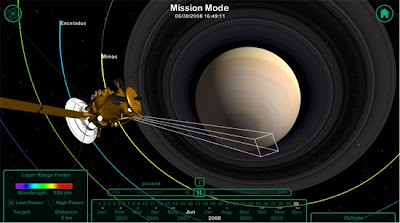
Click on the picture above to start your tour! Explore all the different places the simulation can take you?
On binder paper:
1. List 10 facts that you learn about Saturn or the Cassini Mission through exploring the simulation.
2. Choice: Choose from the following two essay questions to answer in 3-4 paragraphs
a. What do you think is the purpose of missions such as Cassini? NASA spends billions of dollars to send missions like Cassini into Space. Do you think it is worth it? (persuasive essay)
b. Write a guide that would go with the Cassini simulation, leading a student through important parts of the tour. Include questions that a student could answer as they follow your guide.
Ex. 1. Click on "Moon Mode" at the bottom of the screen.
2. Click on Titan
a. Describe Titan's atmosphere
Today we will take a virtual tour of Saturn's system.
Click on the picture above to start your tour! Explore all the different places the simulation can take you?
On binder paper:
1. List 10 facts that you learn about Saturn or the Cassini Mission through exploring the simulation.
2. Choice: Choose from the following two essay questions to answer in 3-4 paragraphs
a. What do you think is the purpose of missions such as Cassini? NASA spends billions of dollars to send missions like Cassini into Space. Do you think it is worth it? (persuasive essay)
b. Write a guide that would go with the Cassini simulation, leading a student through important parts of the tour. Include questions that a student could answer as they follow your guide.
Ex. 1. Click on "Moon Mode" at the bottom of the screen.
2. Click on Titan
a. Describe Titan's atmosphere
Subscribe to:
Posts (Atom)
